






Does Taking Out a Loan Improve Your Credit?
Taking out a loan can improve your credit score and diversify your credit mix, but it is generally discouraged to borrow money solely for this purpose because of the associated costs. While establishing a track record of consistent repayment does help, you should weigh loan expenses against your overall financial well-being rather than taking on unnecessary debt.
Transcript
ELLEN:
It probably will help improve your credit score. I'm not going to lie. I've heard people say that they've taken out a loan not because they need the money, but because they believe that will help improve their credit score. I'm not going to lie, it probably will help improve your credit score. But taking out a loan you don't need is not generally a good financial habit. You're going to end up paying some amount of money for that loan, and that's money out of your pocket that you could use for savings, for investing, or just to treat yourself to an ice cream.
Having diverse types of credit does improve your credit score. If you've had an auto loan and a mortgage and an installment loan and a credit card, that's better than having just had four credit cards. I would generally discourage taking out a loan solely for the purpose of improving your credit. And if you do decide you want to take out a loan to improve your credit, really think about the cost of that loan for your overall financial well-being. You should be very mindful about how you use credit and specifically debt.
More in this series

Credit Invisibility: What It Means and How to Fix It
No credit score? You’re not alone. Ellen explains what it means to be “credit invisible” and how to start building credit—even without a loan.
1:41
1:41
Credit Invisibility: What It Means and How to Fix It
No credit score? You’re not alone. Ellen explains what it means to be “credit invisible” and how to start building credit—even without a loan.
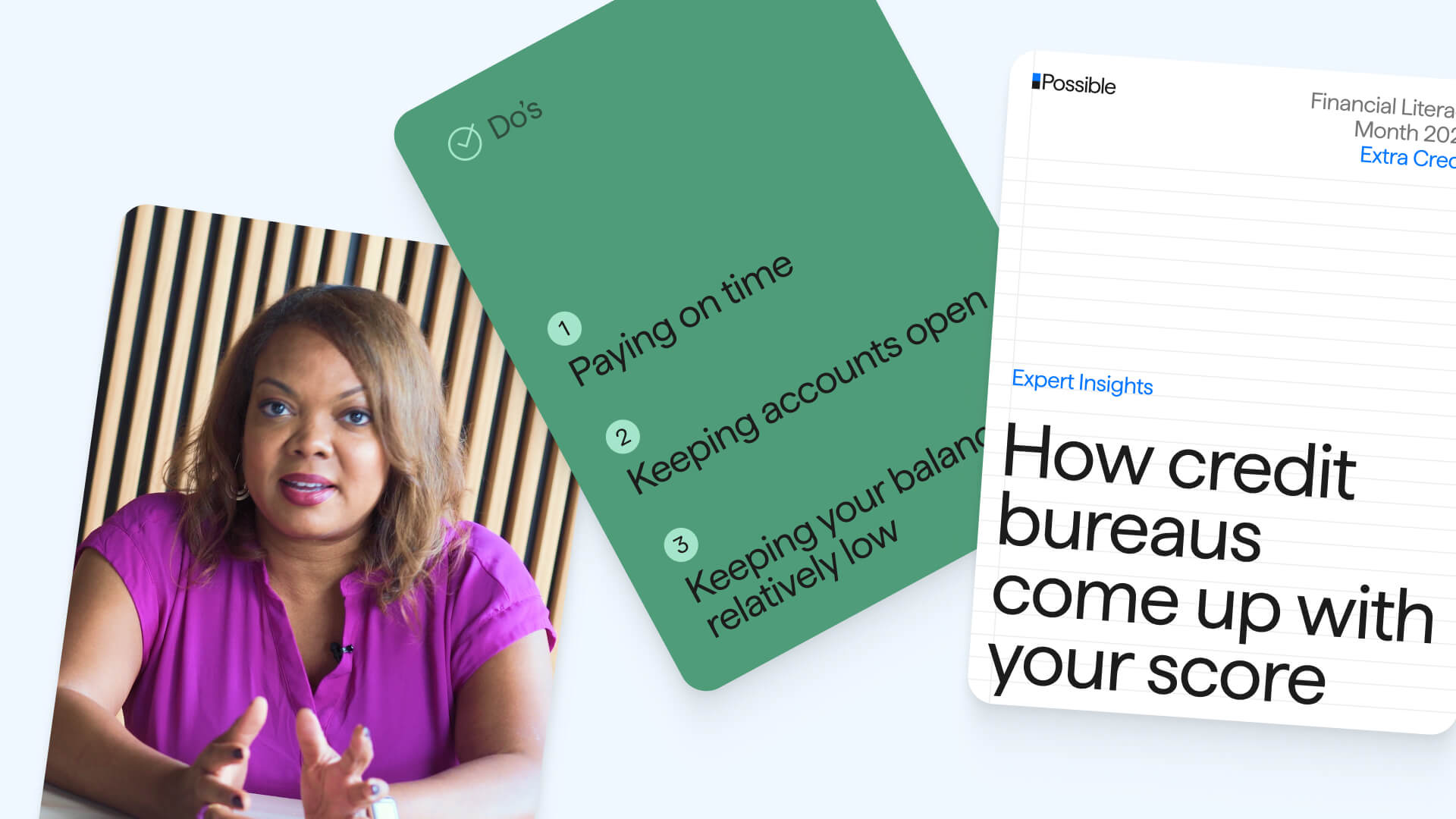
What Impacts Your Credit Score?
Your credit score can feel like a mystery—because in many ways, it is. In this quick breakdown, Legal & Finance Expert, Daynor, shares what really goes into your score, what improves it, what drags it down, and how to actually check it. Whether you’re just starting or trying to bounce back, this is info worth knowing.
1:31
1:31
What Impacts Your Credit Score?
Your credit score can feel like a mystery—because in many ways, it is. In this quick breakdown, Legal & Finance Expert, Daynor, shares what really goes into your score, what improves it, what drags it down, and how to actually check it. Whether you’re just starting or trying to bounce back, this is info worth knowing.
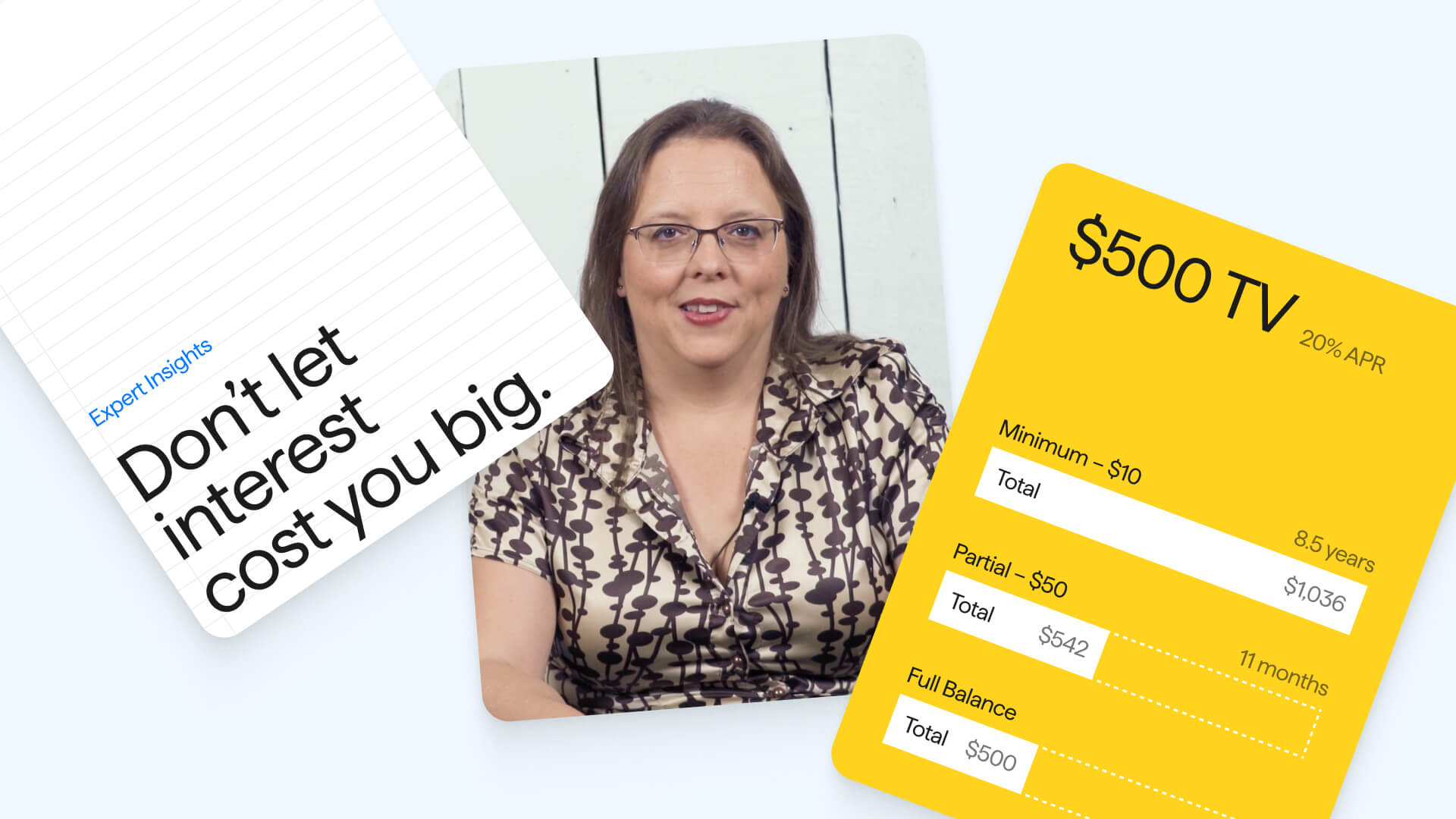
How Credit Card Interest Works
How much does that $500 TV really cost? In this Extra Credit video, Chief Credit Officer Ellen Falbo walks through three common ways people pay off credit cards—and how interest can quietly double the price of everyday purchases.
1:07
1:07
How Credit Card Interest Works
How much does that $500 TV really cost? In this Extra Credit video, Chief Credit Officer Ellen Falbo walks through three common ways people pay off credit cards—and how interest can quietly double the price of everyday purchases.

Avoid Credit Card Interest Using the Grace Period
Learn how to use credit cards without paying interest. Ellen explains the “grace period,” statement balances, and smart strategies to stay out of debt.
1:31
1:31
Avoid Credit Card Interest Using the Grace Period
Learn how to use credit cards without paying interest. Ellen explains the “grace period,” statement balances, and smart strategies to stay out of debt.
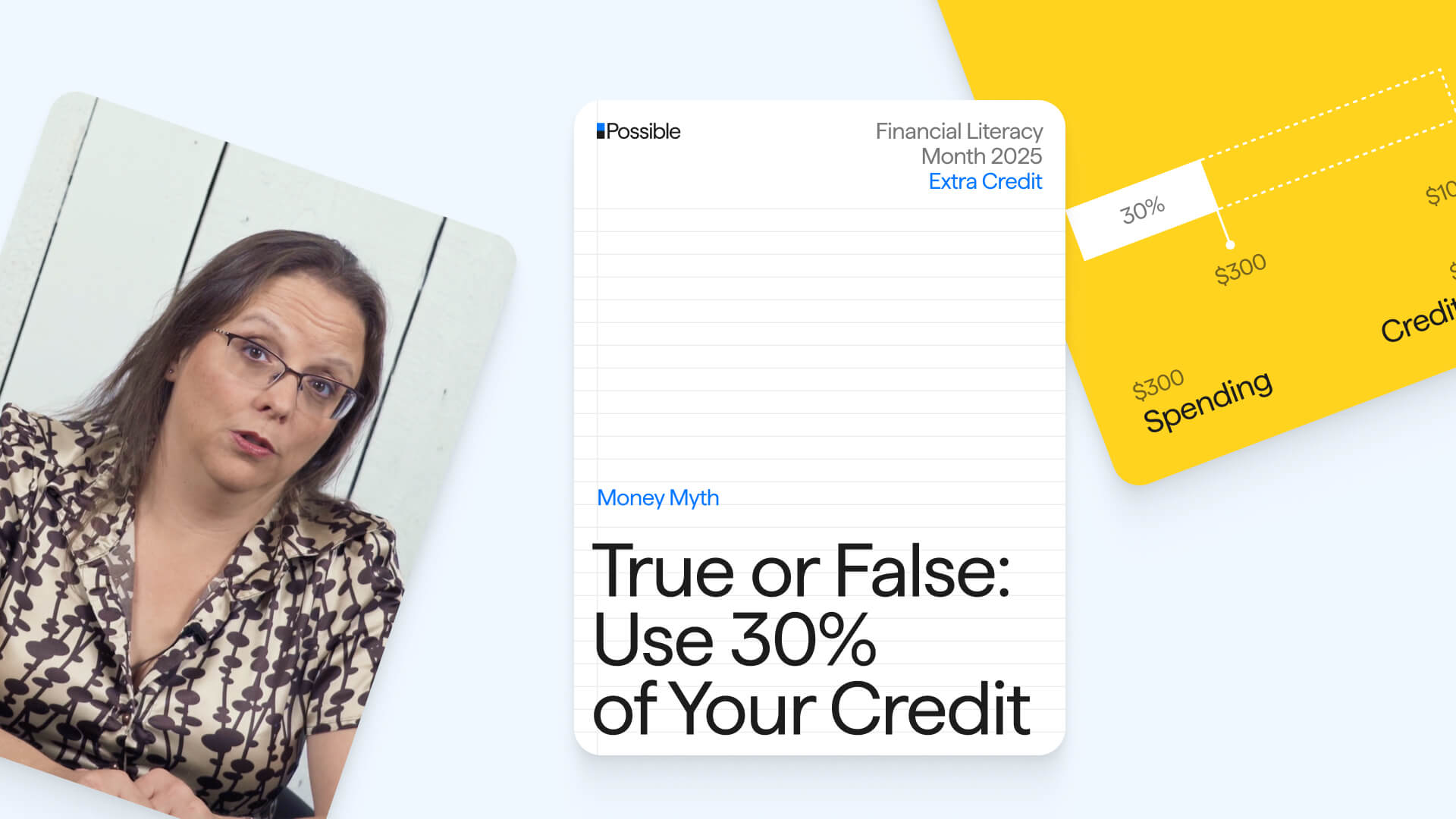
Do You Need to Carry a Balance to Build Credit?
You don’t need to carry a balance to build credit. In this quick myth-busting episode, Ellen Falbo, Chief Credit Officer at Possible, explains how credit utilization really works—and how to boost your score without paying interest.
1:06
1:06
Do You Need to Carry a Balance to Build Credit?
You don’t need to carry a balance to build credit. In this quick myth-busting episode, Ellen Falbo, Chief Credit Officer at Possible, explains how credit utilization really works—and how to boost your score without paying interest.
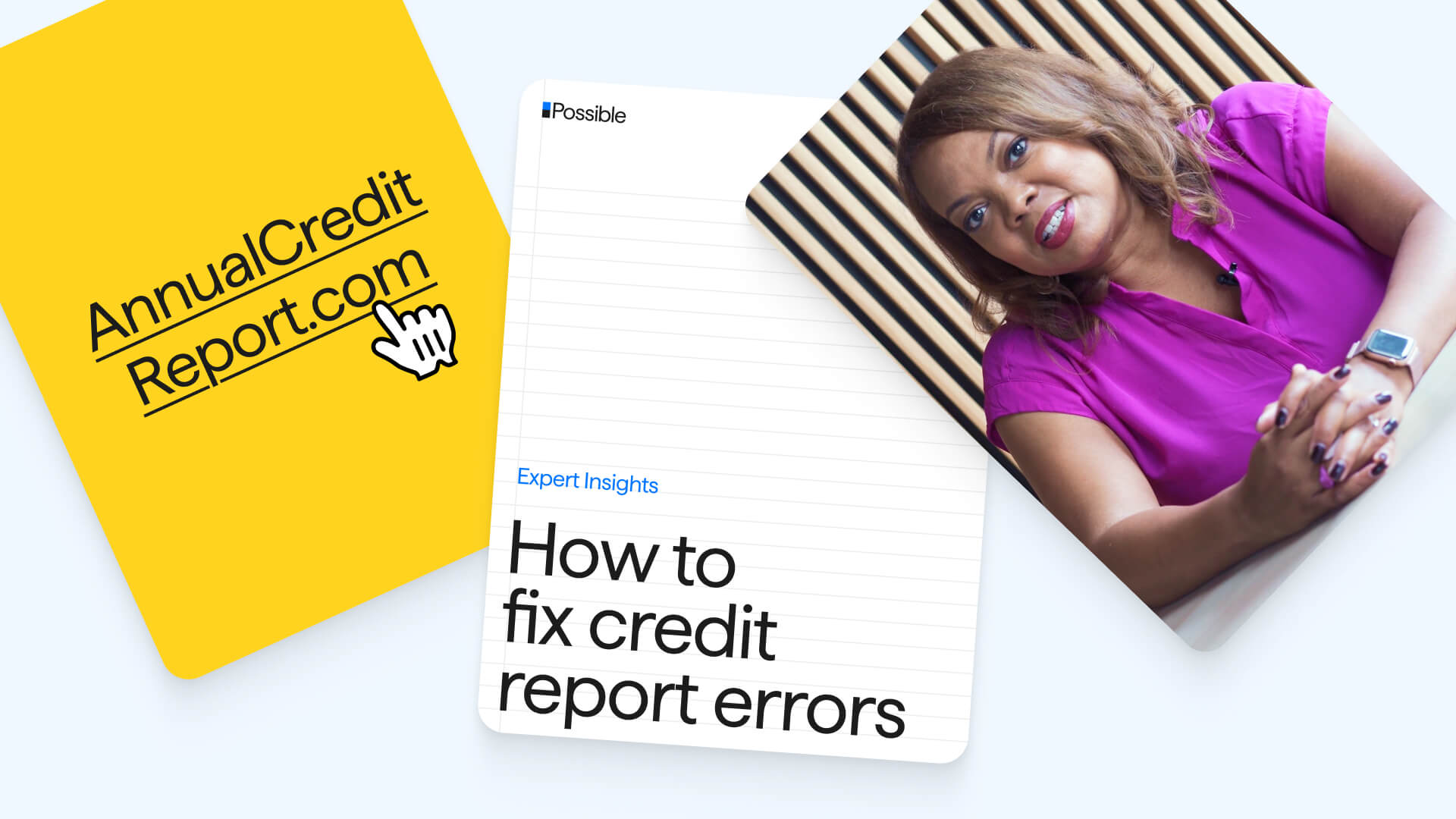
Fix Credit Report Errors and Dispute Inaccuracies
Learn how to fix credit report errors and dispute inaccurate information under the Fair Credit Reporting Act. Legal & Finance expert, Daynor, explains your rights and where to start.
0:46
0:46
Fix Credit Report Errors and Dispute Inaccuracies
Learn how to fix credit report errors and dispute inaccurate information under the Fair Credit Reporting Act. Legal & Finance expert, Daynor, explains your rights and where to start.

A New Way To Think About Your Credit Score
Is your credit score 640 or 639? It might not matter as much as you think. In this episode of Credit Diaries , Ellen Falbo, our Chief Credit Officer, breaks down credit myths, scoring models and what actually counts for Sue, a Possible member since 2022.
1:00
1:00
A New Way To Think About Your Credit Score
Is your credit score 640 or 639? It might not matter as much as you think. In this episode of Credit Diaries , Ellen Falbo, our Chief Credit Officer, breaks down credit myths, scoring models and what actually counts for Sue, a Possible member since 2022.
All products are subject to eligibility and approval by Possible Financial Inc. dba “Possible Finance” and “Possible” or its banking partner Coastal Community Bank. Eligibility for a product is not guaranteed.
For Loans, Possible Finance has direct lending licenses in AK, CA, HI, ID, UT and WA. Idaho Residents: License #RRL-10073; Louisiana Residents: License #1697898; Ohio Residents: License #ST.760161.000; Washington License #530-CC/SL-111888. California Residents: Possible Finance is licensed by the Department of Financial Protection and Innovation, pursuant to the California Deferred Deposit Transaction Law, License #10DBO-105848.
Loans in AL, AR, AZ, DE, FL, IA, IN, KS, KY, LA, MI, MO, MS, MT, NC, NE, NH, NV, OH, OK, OR, RI, SC, TN, TX, VA, VT, and WY are made by Coastal Community Bank, and serviced by Possible Finance. Texas Residents: Possible Finance is a licensed Credit Access Business; License #1800061850-160823.
*Funding typically occurs within seconds; ACH transfers take 1-2 business days. Instant Delivery fee may apply in select states.
^Loan amounts & structure vary by state. Max amount not typical.
°Savings since 2017 includes fees Possible doesn't charge (e.g., NSF, rollover) plus reduced costs from customers borrowing less frequently than typical payday loan users, assuming customers would otherwise have faced industry-average fees and borrowing rates. Sources: internal data; state regulatory data; CFPB (Pub. No. 2023-9); Pew ("Payday Lending in America," 2013); CRL ("Down the Drain," 2025). Individual results may vary.
¨See possiblefinance.com/samplepaymentschedules for rates & terms examples.
ˇReal customer compensated or incentivized. Results vary.
˘Possible Loans offer up to 29 days of payment flexibility from original due date.
All trademarks and brand names are property of their respective owners. Use of them does not imply any affiliation with or endorsement by them.
If you have questions or concerns, please contact the Support Team at support.possiblefinance.com
Mailing Address: Possible Finance, PO Box 98686, Las Vegas, NV 89193
Possible Financial Inc. © 2026 - NMLS #1697898
All products are subject to eligibility and approval by Possible Financial Inc. dba “Possible Finance” and “Possible” or its banking partner Coastal Community Bank. Eligibility for a product is not guaranteed.
For Loans, Possible Finance has direct lending licenses in AK, CA, HI, ID, UT and WA. Idaho Residents: License #RRL-10073; Louisiana Residents: License #1697898; Ohio Residents: License #ST.760161.000; Washington License #530-CC/SL-111888. California Residents: Possible Finance is licensed by the Department of Financial Protection and Innovation, pursuant to the California Deferred Deposit Transaction Law, License #10DBO-105848.
Loans in AL, AR, AZ, DE, FL, IA, IN, KS, KY, LA, MI, MO, MS, MT, NC, NE, NH, NV, OH, OK, OR, RI, SC, TN, TX, VA, VT, and WY are made by Coastal Community Bank, and serviced by Possible Finance. Texas Residents: Possible Finance is a licensed Credit Access Business; License #1800061850-160823.
*Funding typically occurs within seconds; ACH transfers take 1-2 business days. Instant Delivery fee may apply in select states.
^Loan amounts & structure vary by state. Max amount not typical.
°Savings since 2017 includes fees Possible doesn't charge (e.g., NSF, rollover) plus reduced costs from customers borrowing less frequently than typical payday loan users, assuming customers would otherwise have faced industry-average fees and borrowing rates. Sources: internal data; state regulatory data; CFPB (Pub. No. 2023-9); Pew ("Payday Lending in America," 2013); CRL ("Down the Drain," 2025). Individual results may vary.
¨See possiblefinance.com/samplepaymentschedules for rates & terms examples.
ˇReal customer compensated or incentivized. Results vary.
˘Possible Loans offer up to 29 days of payment flexibility from original due date.
All trademarks and brand names are property of their respective owners. Use of them does not imply any affiliation with or endorsement by them.
If you have questions or concerns, please contact the Support Team at support.possiblefinance.com
Mailing Address: Possible Finance, PO Box 98686, Las Vegas, NV 89193
Possible Financial Inc. © 2026 - NMLS #1697898
All products are subject to eligibility and approval by Possible Financial Inc. dba “Possible Finance” and “Possible” or its banking partner Coastal Community Bank. Eligibility for a product is not guaranteed.
For Loans, Possible Finance has direct lending licenses in AK, CA, HI, ID, UT and WA. Idaho Residents: License #RRL-10073; Louisiana Residents: License #1697898; Ohio Residents: License #ST.760161.000; Washington License #530-CC/SL-111888. California Residents: Possible Finance is licensed by the Department of Financial Protection and Innovation, pursuant to the California Deferred Deposit Transaction Law, License #10DBO-105848.
Loans in AL, AR, AZ, DE, FL, IA, IN, KS, KY, LA, MI, MO, MS, MT, NC, NE, NH, NV, OH, OK, OR, RI, SC, TN, TX, VA, VT, and WY are made by Coastal Community Bank, and serviced by Possible Finance. Texas Residents: Possible Finance is a licensed Credit Access Business; License #1800061850-160823.
*Funding typically occurs within seconds; ACH transfers take 1-2 business days. Instant Delivery fee may apply in select states.
^Loan amounts & structure vary by state. Max amount not typical.
°Savings since 2017 includes fees Possible doesn't charge (e.g., NSF, rollover) plus reduced costs from customers borrowing less frequently than typical payday loan users, assuming customers would otherwise have faced industry-average fees and borrowing rates. Sources: internal data; state regulatory data; CFPB (Pub. No. 2023-9); Pew ("Payday Lending in America," 2013); CRL ("Down the Drain," 2025). Individual results may vary.
¨See possiblefinance.com/samplepaymentschedules for rates & terms examples.
ˇReal customer compensated or incentivized. Results vary.
˘Possible Loans offer up to 29 days of payment flexibility from original due date.
All trademarks and brand names are property of their respective owners. Use of them does not imply any affiliation with or endorsement by them.
If you have questions or concerns, please contact the Support Team at support.possiblefinance.com
Mailing Address: Possible Finance, PO Box 98686, Las Vegas, NV 89193
Possible Financial Inc. © 2026 - NMLS #1697898